
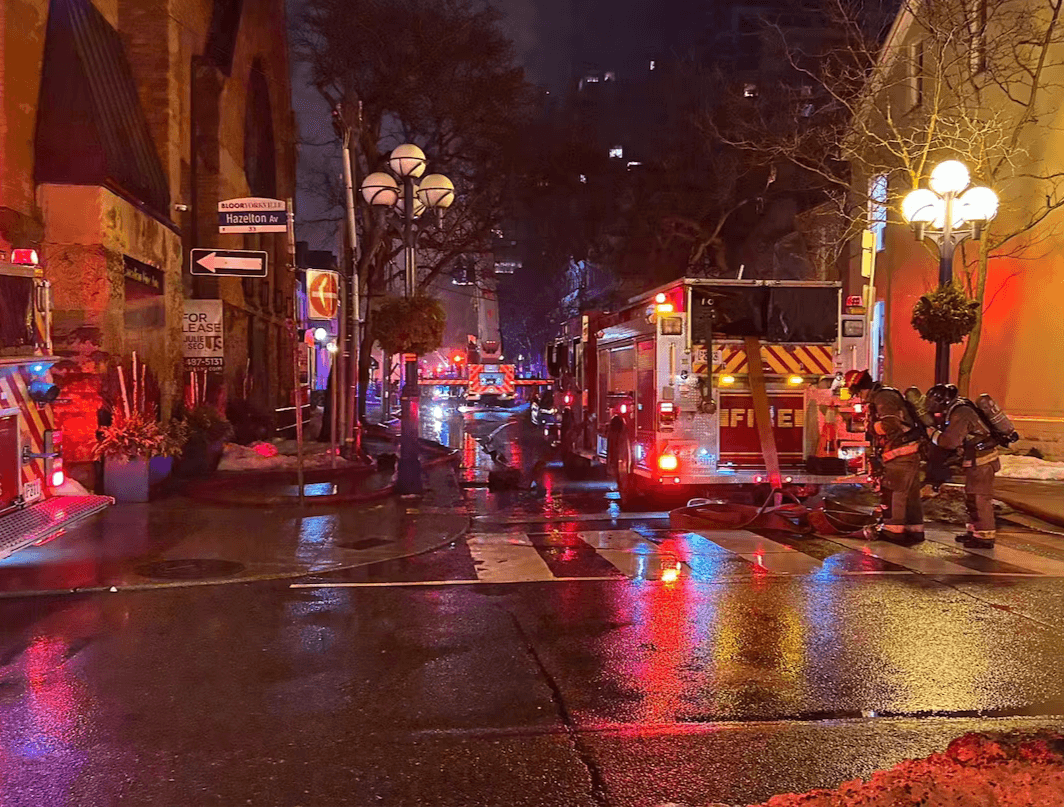
A large multi-alarm fire swept through a building in Toronto's Yorkville neighbourhood, drawing dozens of firefighters to one of the city's densest urban blocks. Smoke billowed over Bloor Street, pedestrians were rerouted, and residents of adjacent towers watched their own balconies as crews worked to contain the blaze. No single event makes a stronger case for well-designed fire alarm systems than a downtown incident that unfolds in full public view.
Why Early Detection Matters
In tightly packed neighbourhoods like Yorkville, fire can move through shared walls, shafts, and attic spaces faster than occupants can react. Minutes make a difference. A well-commissioned detection system catches smoke before residents smell it, activates notification devices that are audible in every suite, and transmits a signal to the central station so that emergency services roll out without waiting for a 911 call.
Modern addressable systems go further. They identify exactly which detector has triggered, letting arriving fire crews head straight to the originating floor instead of sweeping the whole building. That single piece of information — the device ID on the panel — can shave meaningful time off the first intervention.
The Role of Reliable Notification
Detection alone is not enough. Occupants must hear the alarm loud and clear, even in bedrooms behind closed doors, and visual devices must alert residents who cannot rely on audible signals. Horn-strobe appliances need to be placed according to current code, tested on schedule, and verified by a certified technician. When notification works, people evacuate; when it does not, a containable fire becomes a news headline.
Back-up power is the other half of the story. A fire that compromises the building's electrical supply cannot be allowed to silence the alarm system. Properly sized sealed rechargeable batteries keep panels alive for the code-mandated standby and alarm durations, which is why battery inspection and replacement schedules are taken seriously by any reputable service provider.
What Building Owners Should Do Now
If your building has not had a formal inspection in the past twelve months, make that call. Verification of fire alarm systems under CAN/ULC-S537 and annual inspection under CAN/ULC-S536 are both required, and deficiencies caught during a scheduled visit are far cheaper than repairs made after an event. Ask your service provider for documentation and keep it accessible for AHJ reviews.
The Yorkville fire will be studied, reports will be filed, and tenants will move on. But the lesson for every property manager is simple: the systems that protect lives only work when they are designed, installed, verified, and maintained by people who take the job seriously. That is the standard Maple Armor builds its FireWatcher platform around every day.